Industry Knowledge & News

Packaging Insights & Updates

Discover expert advice, technical guides, industry trends, and innovations in custom packaging, thermoforming, and supply chain fulfillment.

0%

Product Kitting and Fulfillment Services can turn separate items into ready-to-ship kits, bundles, or subscription boxes. In China, these providers may also coordinate sourcing, assembly, labeling, storage, and order dispatch. The work is tangible: a barcode scanned, inserts placed, cartons sealed, and inventory updated. Small handling errors can still affect delivery speed and customer experience.

Supply chain scholar Martin Christopher is widely associated with the observation, “The real competition is not company against company but supply chain against supply chain.” That idea helps explain why kitting deserves careful evaluation. A provider’s value depends not only on packing speed, but also on inventory accuracy, clear communication, and reliable handoffs between teams. Details matter.

This overview of China’s top 10 Product Kitting and Fulfillment Services providers is intended to help buyers compare capabilities, not promise identical results. Look at each company’s service scope, facility locations, quality checks, technology, and experience with your product type. Ask how it handles peak-season volume and corrections when an order is packed incorrectly. A polished website proves little. One limitation is that public profiles rarely reveal everyday process consistency; a sample order and specific operational questions can provide a more grounded view.
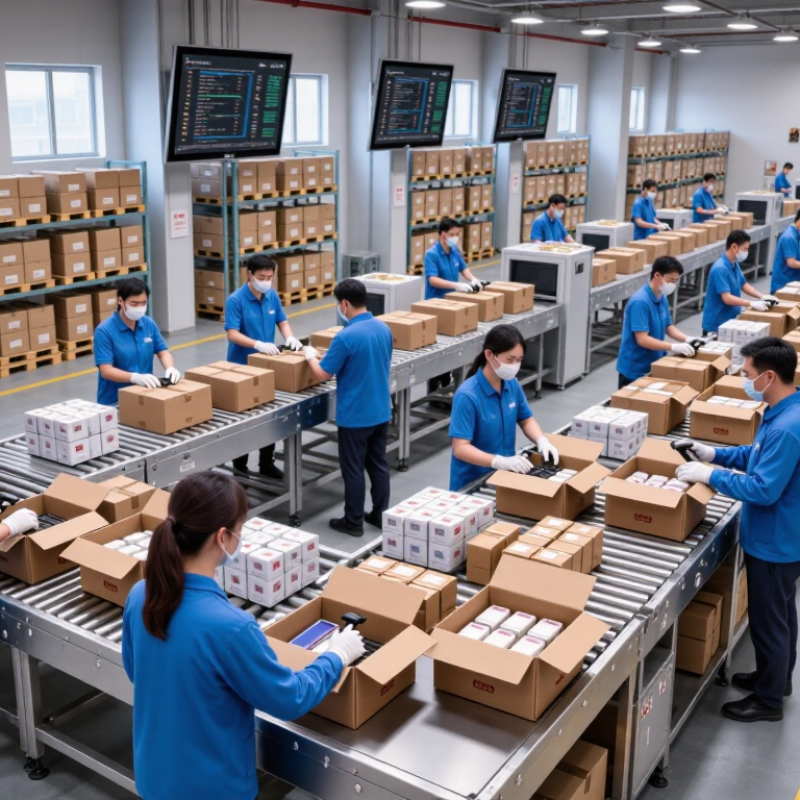
China Top 10 Product Kitting and Fulfillment Services

What Product Kitting and Fulfillment Services Include

Product kitting and fulfillment services combine inventory handling, light assembly, packing, and order dispatch. A provider may receive components, check quantities and visible damage, then store each item by SKU and location. Staff follow a bill of materials to group parts into a kit, such as a small box containing a device, cable, printed guide, and protective insert. They can apply labels, add custom packaging, scan finished kits, and update inventory records. Some providers also handle order picking, carrier handoff, returns, and restocking.

Accuracy depends on clear instructions and checks at each step. A missing insert can delay an otherwise complete order. Teams may use barcode scans, weight checks, or visual inspections before sealing cartons. The Council of Supply Chain Management Professionals reported that U.S. business logistics costs reached $2.3 trillion in 2023, or 8.7% of GDP, in its 2024 State of Logistics Report. That figure shows the scale of logistics spending, not the savings any single kitting program will deliver. Kitting is not magic. Poor component data or frequent design changes can create extra handling, and that deserves honest review.

Fulfillment may extend beyond packing: providers can allocate stock across channels, process incoming orders, prepare shipping documents, and share tracking updates. Service levels vary, so businesses should verify cut-off times, inventory reporting, quality procedures, and return-handling rules before launch. A simple pilot helps reveal whether the kit instructions work on a busy packing bench. One overlooked detail can matter.

How Kitting and Fulfillment Work in China

Kitting and fulfillment in China usually begin with clear product data. A warehouse team receives components, checks quantities, and records visible damage before storage. For each kit, the order file should specify item codes, quantities, packaging, and any insert. A pick list might call for one cable, two accessories, and a folded instruction sheet. Staff then scan the items, assemble the kit, and verify its contents against the order. Small details matter. A misplaced insert can delay dispatch or trigger a customer complaint.

Once kits are ready, fulfillment teams pack orders, apply shipping labels, and update inventory records. Carton size and protective materials affect storage space and shipping costs, so test a packed sample before setting final specifications. Share realistic forecasts and flag promotion dates early; sudden order spikes can strain labor and packing capacity. Tracking data should be checked against carrier handoff records. Processes vary between facilities, and spreadsheets are not always perfectly current. Build in time to reconcile discrepancies rather than assuming every scan is correct.

Tips: Send one approved sample kit, a photo-based packing guide, and a clear label map. Ask the provider to report shortages before substituting materials. Then inspect a few packed orders; even a tidy workflow can miss something.

Key Factors for Evaluating Chinese Service Providers

When evaluating Chinese product kitting and fulfillment providers, look beyond quoted prices. Ask how staff verify each kit against the bill of materials. A sample order can reveal whether inserts, labels, and product quantities match your instructions. Small details matter. Request documented quality checks, defect records, and a clear process for correcting packing errors.

Capacity should be tested against your real order pattern, not a sales estimate. Ask how the warehouse handles seasonal spikes, low-stock components, and last-minute artwork changes. Check whether inventory records update promptly and whether the provider can share shipment-level tracking. If possible, review a sample dashboard or walk through a typical packing station. A neat showroom is not proof of consistent daily work.

Communication is another practical measure. Agree on response times, escalation contacts, and how changes are approved before production. Compare storage, kitting, packaging, and outbound fees separately; vague bundled quotes can hide costs. Ask for references from businesses with similar products and order volumes. Then run a small pilot. It may expose gaps neither side noticed. I would not assume the first trial tells the whole story, either; repeat checks matter, especially after volume increases.

China Top 10 Product Kitting and Fulfillment Services: Key Evaluation Factors

Illustrative importance scores for common provider-selection criteria, rated from 1 (lower priority) to 5 (higher priority). These are not measured ratings of specific service providers.

When comparing providers, assess inventory and order accuracy, quality controls, integration capabilities, customization options, lead times, scalability, cost transparency, shipping coverage, and returns handling against your operational requirements.

Profiles of China’s Top 10 Kitting and Fulfillment Services

China’s kitting and fulfillment landscape includes specialists with different strengths, not one universal leader. These profiles compare ten service types rather than claim an independently audited ranking of companies. That distinction matters. MHI’s 2024 Annual Industry Report found that 55% of surveyed supply-chain leaders planned to increase technology investment. The figure is not China-specific, but it highlights why warehouse visibility and accurate order data matter.

Export-ready assembly kits suit manufacturers shipping coordinated components. E-commerce bundle packing combines separate items into one parcel. Retail-ready packs focus on shelf presentation, while subscription-box teams handle recurring assortments. Promotional-kit providers manage short campaigns; spare-parts services prioritize clear picking and small-item accuracy. Custom packaging teams adapt cartons and inserts. Returns specialists inspect goods and prepare eligible items for restocking. Inventory-integrated operators connect stock records with order processing. Cross-border fulfillment teams coordinate parcel handoffs and shipment updates. Details matter.

When evaluating providers, ask for sample pick records, packing tolerances, and order-accuracy definitions. A practical site visit can reveal whether labels scan cleanly and whether packed kits match the bill of materials. Smaller providers may offer flexible handling, but peak-season capacity needs verification. Even a neat sample can hide a weak process. MHI’s technology data should be treated as an industry signal, not proof that any provider uses automation effectively.

How to Match a Provider to Your Business Needs

Choosing among China’s top product kitting and fulfillment services starts with your order profile, not a provider’s headline price. Ask how it handles component receiving, kit assembly, barcode checks, and peak-season volume. A sample kit should match the real one: same inserts, packaging, labels, and packing sequence. Small details matter. A misplaced leaflet can trigger returns or customer complaints.

MHI’s 2024 Annual Industry Report found that 55% of supply chain leaders planned to invest more than $1 million in supply chain innovation over the following five years. That signals growing interest in technology, but automation alone does not prove a provider is right for your business. Check scan accuracy, inventory visibility, and how quickly staff can resolve a short shipment.

For cross-border e-commerce, delivery choices matter too: the 2024 DHL eCommerce Trends Report found that 81% of shoppers may abandon a purchase when their preferred delivery option is unavailable. Match the provider’s carrier access and dispatch schedule to your customers’ expectations. Test it first. I would still treat any pilot as imperfect; a quiet month rarely reveals how a service performs during a sudden sales spike.

FAQS

What do product kitting and fulfillment services usually include?

Providers may receive and inspect components, store them by item code, assemble kits, pack orders, and update inventory. Some also handle shipping, returns, and restocking.

How can a provider check that each kit is complete?

Teams can scan barcodes, check package weight, and visually inspect kits against a parts list. A missing cable or leaflet can still slip through.

What kinds of kitting and fulfillment services are available?

Options include subscription boxes, retail-ready packs, promotional kits, spare-parts orders, custom packaging, and cross-border parcel handling. The best fit depends on your products and order pattern.

How should I choose a provider for my business?

Compare receiving procedures, assembly instructions, inventory reporting, dispatch times, return rules, and peak-season capacity. A low quote alone tells you little.

What should a sample kit include?

Use the real components, inserts, labels, and packaging. Check that the packed kit follows the required sequence. Details matter.

Why run a pilot before moving all orders?

A small pilot can reveal unclear instructions, scanning problems, or packaging issues at a busy packing bench. Test it first. A quiet trial may not reveal peak-season weaknesses.

Does automation guarantee accurate fulfillment?

No. Scanning tools can improve visibility, but staff still need clear instructions and reliable checks. Technology is not a guarantee.

What delivery details should I confirm?

Ask which delivery options are available, when orders leave the warehouse, and how tracking updates are shared. If customers cannot choose a suitable option, they may abandon an order.

Conclusion

Product Kitting and Fulfillment Services bring together inventory preparation, order assembly, packaging, storage, and shipping support. In China, these services can help businesses coordinate products and components from different suppliers, prepare ready-to-ship kits, and manage orders through a structured fulfillment process. Understanding each stage—from receiving and checking stock to assembling kits and dispatching orders—helps businesses plan timelines, costs, and inventory requirements.

When evaluating Chinese providers, consider their experience with your product type, quality-control procedures, technology, communication, capacity, pricing, and shipping options. The top service providers may differ in the facilities and support they offer, so compare them against your operational needs rather than relying on a single measure. A business with frequent product variations may prioritize flexible assembly, while a company handling steady order volumes may focus on consistent processing and inventory visibility. Matching the provider’s capabilities to your products, customers, and growth plans can make fulfillment more reliable and efficient.

Ethan

Ethan

Ethan is a dedicated marketing professional with a deep understanding of the intricacies of our company’s product offerings. With years of experience in the industry, he seamlessly blends creativity with strategic insight, making him an invaluable asset to our team. Ethan regularly updates our......