Packaging Insights & Updates
Discover expert advice, technical guides, industry trends, and innovations in custom packaging, thermoforming, and supply chain fulfillment.
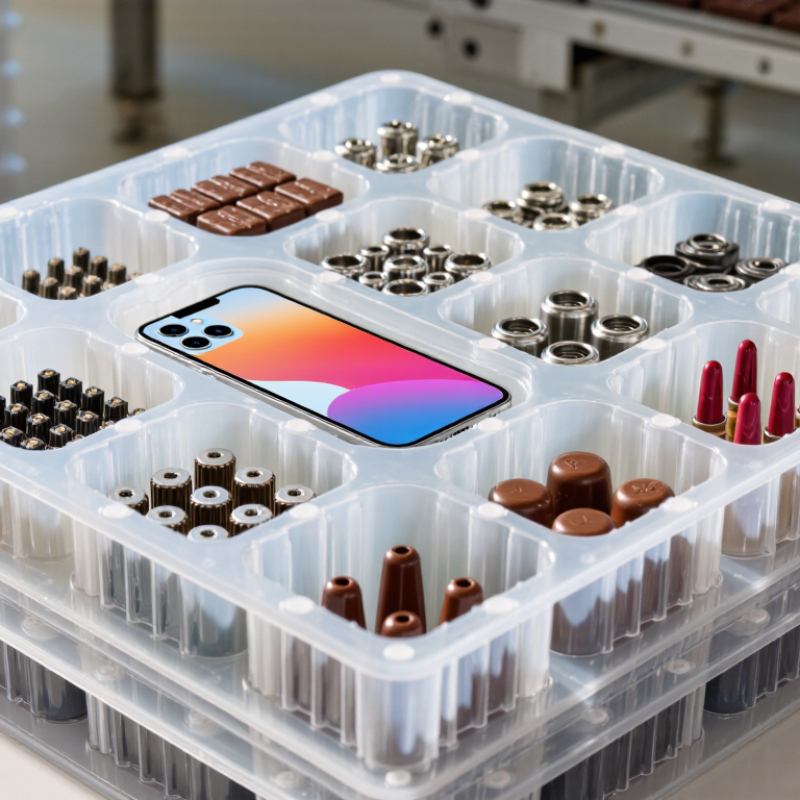
Thermoformed Plastic Trays are practical packaging and handling solutions shaped from heated plastic sheets. Manufacturers use them to protect products during storage, transport, assembly, and retail display. Their molded cavities hold items securely, reducing movement, surface scratches, and stacking damage.
Common applications include electronics, automotive components, cosmetics, food products, and medical-device packaging. A tray may separate tiny connectors, support a smartphone during shipment, or present chocolates neatly in a display box. Dimensions can be tailored to the product. Material choice also matters. PET, PP, PVC, and recycled plastics offer different levels of clarity, rigidity, chemical resistance, and temperature tolerance.
In real production, tray performance depends on more than appearance. Engineers examine wall thickness, corner strength, nesting efficiency, and compatibility with automated equipment. Experienced packaging teams often test filled trays through vibration, compression, and drop conditions before approval. Small design details matter. Rounded corners can reduce stress, while carefully placed ribs can improve stiffness without adding much material.
Not every application suits thermoforming. Very heavy parts may require reinforced packaging or another process. Early prototypes can also expose unexpected warping, sharp edges, or poor product release. That is why reliable suppliers document material specifications, tooling limits, and quality checks. Recyclability should be reviewed honestly, because local collection systems may not accept every plastic type. A useful tray protects the product, supports efficient handling, and avoids unnecessary material whenever practical.
What Thermoformed Plastic Trays Are and How They Are Made
What Are Thermoformed Plastic Trays Used For?
Thermoformed plastic trays are shaped containers made from heated plastic sheets. They hold products securely during storage, transport, display, or assembly. Common uses include food portions, electronic components, medical supplies, hardware, and retail items.
The process starts with a flat sheet of plastic, often PET, PP, or polystyrene. Heat softens the sheet until it becomes flexible. A mold then gives it the required shape. Vacuum pressure, air pressure, or both pull the plastic tightly against the mold. After cooling, the formed sheet is trimmed into individual trays. Quality checks examine wall thickness, edge accuracy, surface marks, and product fit. Small design errors can cause movement or damage. The process is efficient, but it is not foolproof.
Tips:
Match the plastic to the product and environment. Check heat resistance, stiffness, chemical contact, and recyclability before production. Add rounded corners to reduce stress and improve cleaning. Test the tray with real products, not only drawings. A tray that looks precise may still stack poorly or resist removal. This practical test often reveals problems early. Consider protective liners or custom cavities when surfaces are delicate. Clear labeling can also improve handling, although excessive printing may complicate recycling. Thermoformed trays are usually economical for repeated production, but tooling costs still deserve careful review.
What Are Thermoformed Plastic Trays Used For? — What Thermoformed Plastic Trays Are and How They Are Made
Thermoformed plastic trays are shaped by heating a thermoplastic sheet until it becomes pliable, forming it over or into a mold, cooling it, and trimming the finished part.
| Application Area | Typical Tray Uses | Common Material Options | Why Thermoforming Is Suitable | Important Design Features | Manufacturing Considerations |
|---|---|---|---|---|---|
| Food Packaging | Fresh produce, bakery items, confectionery, meat, seafood, ready meals, and meal-preparation portions. | PET, recycled PET, PP, and food-contact-grade PS where permitted by local regulations. | Trays can be produced with consistent cavities, clear presentation, low weight, and compatibility with lidding films. | Drainage or ventilation holes, smooth food-contact surfaces, stackability, sealing flanges, and controlled cavity depth. | Material selection must meet applicable food-contact requirements. The forming temperature and cooling cycle affect dimensional stability. |
| Medical and Healthcare Packaging | Protective packaging for syringes, instruments, diagnostic components, wound-care products, and procedure kits. | PETG, PET, PP, and other approved medical-grade thermoplastics selected for the required sterilization method. | Custom cavities can hold delicate components securely while allowing visual inspection and efficient packaging of kits. | Rounded edges, cleanable surfaces, tamper-evident features, retention clips, and validated sealing areas. | Material compatibility with sterilization, cleanliness controls, traceability, and packaging validation are essential. |
| Electronics and Electrical Components | Protection for circuit boards, connectors, sensors, cables, switches, and small electronic assemblies. | HIPS, ABS, PET, PETG, PP, or static-control grades when electrostatic protection is required. | Multiple cavities can be formed in one sheet, reducing part handling and helping prevent contact damage during storage and transport. | Anti-static or dissipative properties, locating ribs, finger access, cushioning clearance, and orientation features. | Static-control performance depends on the material formulation and environment. Wall thickness should be checked around deep cavities. |
| Industrial Parts Handling | Reusable work-in-process trays for fasteners, machined parts, molded components, tools, and assembly-line materials. | ABS, HIPS, HDPE, PP, and impact-modified sheet materials. | Trays can be customized to part geometry, making picking, counting, inspection, and automated handling more efficient. | Reinforced rims, nesting or stacking geometry, ergonomic hand access, dividers, and wear-resistant contact areas. | Repeated-use trays should be designed for impact, abrasion, cleaning, and the expected load. Draft angles support mold release. |
| Retail and Point-of-Sale Packaging | Display packs, compartment trays, insert trays, gift-set holders, and protective presentation packaging. | PET, PETG, HIPS, PVC where legally and technically appropriate, and recycled-content sheet. | Transparent or colored trays can present products while holding them in a defined orientation during display and transport. | Visibility, tamper resistance, hanging holes, product retention, branding-free labeling areas, and clean edges. | Surface appearance, trim quality, transparency, and sealing or closure requirements influence the sheet and tooling choice. |
| Agricultural and Horticultural Products | Seedling trays, propagation trays, plant transport trays, and produce-handling inserts. | PP, HIPS, PET, and recycled polymers selected for the required strength and reuse level. | Repeating cavities allow uniform spacing and support efficient planting, handling, and transportation. | Drainage holes, ventilation, root-space geometry, stacking feet, smooth release surfaces, and easy cleaning. | Exposure to moisture, fertilizers, sunlight, and repeated washing may require UV-stabilized or more durable materials. |
| Automotive and Transportation Components | Returnable trays for trim pieces, clips, sensors, lighting components, and interior or under-hood parts. | ABS, HDPE, PP, and impact-resistant multilayer or modified sheets. | Large trays can be formed economically with part-specific locations and protective separation between components. | High-impact protection, secure retention, forklift or hand access, nesting, stacking, and resistance to oils or cleaners. | Designs should account for vibration, temperature range, chemical exposure, and the number of return cycles. |
| Laboratory and Diagnostic Handling | Sample holders, tube racks, reagent-kit inserts, pipette holders, and disposable laboratory organizers. | PP, PETG, PET, and other application-approved materials with suitable chemical resistance. | Formed cavities help organize components and reduce movement, while smooth surfaces can simplify handling and cleaning. | Tube retention, clear identification areas, spill management, chemical resistance, and compatibility with closures. | For regulated applications, material compatibility, cleanliness, dimensional accuracy, and validation requirements must be assessed. |
| Protective Shipping Inserts | Custom inserts for fragile components, instruments, bottles, mechanical parts, and irregularly shaped products. | HIPS, ABS, PET, PP, HDPE, and impact-modified materials. | Product-specific cavities limit movement and distribute contact points, reducing scratches and impact during shipment. | Clearance zones, shock-absorbing geometry, corner protection, stackability, and easy product removal. | Testing should consider vibration, compression, drop impact, humidity, and the complete shipping configuration. |
| Appliance and Equipment Components | Interior liners, covers, housings, drawer components, protective panels, and formed equipment enclosures. | ABS, HIPS, HDPE, PP, and other thermoplastics selected for heat, impact, or chemical resistance. | Large surface areas and integrated contours can often be produced with relatively low tooling complexity compared with injection molding. | Uniform appearance, mounting points, ventilation openings, ribbing, edge returns, and controlled tolerances. | Deep draws, sharp corners, and uneven heating can cause thinning. Tool design and sheet distribution should be reviewed early. |
FAQS
They are shaped containers made from heated plastic sheets. A mold creates cavities for products. After cooling, the sheet is trimmed.
A flat sheet is heated until flexible. Vacuum, air pressure, or both pull it against a mold. Cooling fixes the shape.
They can hold food portions, electronics, medical supplies, hardware, toys, and small household items. The cavities reduce movement.
Shaped cavities protect meat, seafood, fruit, bakery products, and ready meals. Clear surfaces can show color and portion size.
No. Better protection may reduce damage, but packaging cannot solve food waste alone. Hygiene, storage, and temperature control still matter.
Common choices include PET, PP, and polystyrene. Selection depends on heat resistance, stiffness, chemical contact, and recyclability.
Use rounded corners, fitted cavities, protective liners, or softer contact areas. Test real products, not drawings alone. Drawings can mislead.
They should check wall thickness, edge accuracy, surface marks, stacking, and product fit. Small errors may cause movement or damage.
Not always. Mixed materials, printed surfaces, and difficult collection systems can complicate recycling. Mono-material designs may help, but local rules decide the outcome.
Conclusion
Thermoformed Plastic Trays are lightweight, durable packaging solutions made by heating plastic sheets until they become flexible, then shaping them over a mold and cooling them into precise forms. This process allows manufacturers to create trays in different sizes, depths, colors, and designs while maintaining consistent quality. Their strength, low weight, stackability, moisture resistance, and ability to protect products make them useful for many packaging needs.
These trays are commonly used for fresh food, prepared meals, bakery items, produce, retail products, and consumer goods. In industrial settings, they help organize, separate, and protect components during storage and transportation. Medical applications may include the secure presentation and handling of instruments or supplies, where cleanliness and accurate product positioning are important. Choosing the right tray depends on the product’s size, weight, fragility, storage conditions, required protection, material compatibility, and environmental goals. A well-designed thermoformed tray can improve product presentation, handling efficiency, protection, and overall packaging performance.