Packaging Insights & Updates
Discover expert advice, technical guides, industry trends, and innovations in custom packaging, thermoforming, and supply chain fulfillment.
What Is Last Mile Delivery Packaging?
Table of Contents
- Definition and Scope of Last Mile Delivery Packaging
- Key Components and Materials Used in Last Mile Packaging
- How Last Mile Packaging Supports the Delivery Process
- Packaging Design Factors: Protection, Cost, and Sustainability
- Common Applications and Emerging Trends in Last Mile Packaging
- FAQS
- Conclusion
- Related Posts
What Is Last Mile Delivery Packaging?
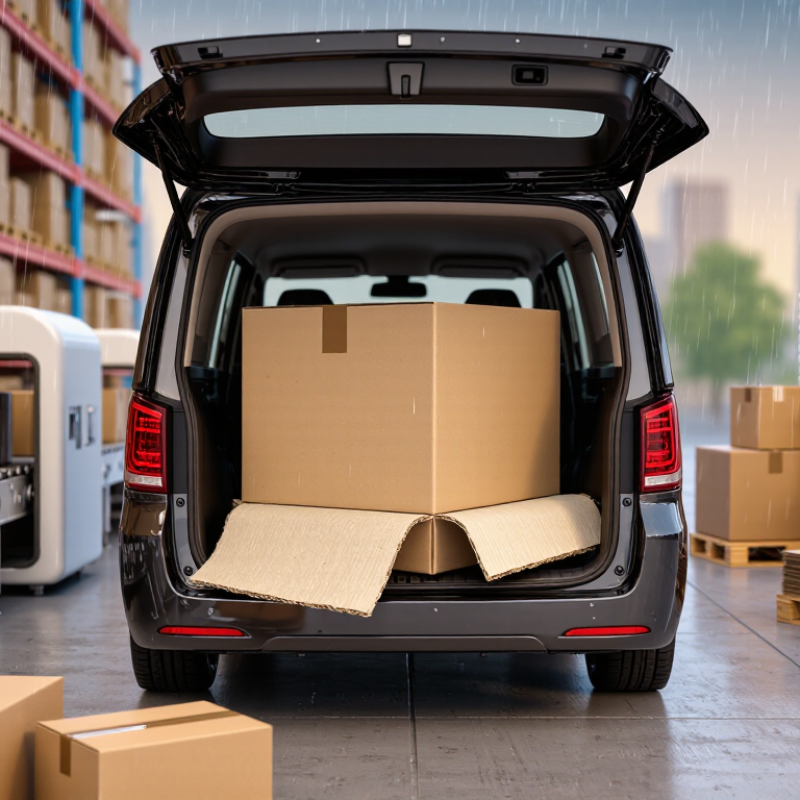
Last Mile Delivery Packaging protects products during the final journey to a customer’s door. It must survive sorting belts, van floors, rain, drops, and repeated handling. This packaging also shapes the unboxing experience. A crushed carton can damage trust before the product is used.
The scale is difficult to ignore. Pitney Bowes reported 161.1 billion parcels worldwide in its 2024 Parcel Shipping Index. The World Economic Forum’s Future of the Last-Mile Ecosystem projects significantly higher urban delivery demand by 2030. More parcels mean more cardboard, plastic films, void fill, and transport emissions. Packaging design therefore affects cost, damage rates, warehouse speed, and environmental performance.
“Waste is a design flaw,” says Tom Szaky, founder of TerraCycle. His statement challenges brands to examine every layer, from oversized boxes to unnecessary inserts. The best solution is not always a recyclable material. A smaller box may reduce transport space, while stronger paperboard may prevent a replacement shipment. Both choices matter.
The answer is not perfectly clean. Reusable packaging can require reverse logistics, washing, and customer participation. Recyclable packaging may still be rejected by local facilities. Good Last Mile Delivery Packaging balances protection, material efficiency, operational reality, and clear disposal guidance. This article examines its meaning, key formats, design decisions, sustainability limits, and measurable business value. Small details matter. A snug fit can prevent movement, reduce damage, and leave less empty air inside every delivery.
Definition and Scope of Last Mile Delivery Packaging
Last mile delivery packaging is the protective system used after an order leaves a local distribution point. It includes cartons, mailers, pouches, cushioning, tape, labels, and tamper-evident closures. Its scope is wider than the outer box. It covers package sizing, opening, handling, delivery exposure, and disposal. The final journey may include a delivery van, a locker, a doorstep, and several handoffs. Each stage can add pressure, vibration, rain, dust, or heat.
A practical definition must include performance and user experience. Packaging should keep products secure without excessive empty space. A correctly sized carton can reduce movement and lower material use. Clear address labels support accurate sorting and safer placement. Easy-open features matter at the kitchen table. Return-ready packaging also belongs within the scope, because the journey may not end at delivery. In field reviews, small weaknesses often appear first: a crushed corner, weak adhesive, or a label that curls in damp weather. These details are easy to underestimate.
Reliable evaluation combines drop tests, compression checks, moisture exposure, and real route observation. Test results should reflect product weight, shape, fragility, and local conditions. Packaging teams also consider accessibility, recycling instructions, and worker handling. No design is perfect. A lighter package may reduce material, yet fail under repeated transfers. A stronger package may protect better, yet create unnecessary waste. The sensible scope includes trade-offs, evidence, and regular review. One useful question remains: what happens between the warehouse scan and the customer’s hands?
Key Components and Materials Used in Last Mile Packaging
What Is Last Mile Delivery Packaging?
Last mile delivery packaging protects an order during its final journey to the customer. It may face sorting belts, vehicle movement, rain, and doorstep handling. The package is also the customer’s first physical interaction with an online seller.
Key Components and Materials Used in Last Mile Packaging
Key components include an outer box or mailer, inner cushioning, closure materials, and shipping labels. Corrugated fiberboard offers strength with relatively low weight. Paper padding, molded pulp, or air cushions can limit movement inside the package. Fit matters. Empty space allows products to shift and suffer impact damage.
Materials should match the product’s weight, shape, fragility, and moisture sensitivity. A rigid carton may suit glassware, while a flexible paper mailer can handle soft, durable goods. Recycled paper, water-based inks, and recyclable films may reduce material impact. However, recyclability depends on local collection systems and clean separation. Moisture changes everything.
Practical packaging tests often include drop checks, compression checks, and vibration trials. Labels need strong adhesion and clear contrast. Seals should resist opening but remain manageable for the recipient. Return-friendly features can also reduce repacking problems. Still, no design is perfect. A lighter package may lower transport emissions but provide less protection. A stronger package may prevent damage but use more material. Packaging teams must review real delivery failures, not rely only on laboratory results.
How Last Mile Packaging Supports the Delivery Process
Last mile delivery packaging is the protective system surrounding a parcel’s final journey. It must survive sorting, vehicle movement, rain, stacking, and doorstep handling. That moment is unforgiving. The Pitney Bowes Parcel Shipping Index reported approximately 161.8 billion parcels worldwide in 2022. McKinsey estimates that last mile activities can represent up to 53% of total shipping costs. Packaging therefore supports delivery efficiency, not just product protection.
A well-designed carton uses enough cushioning without wasting internal space. Right-sizing can reduce void fill, dimensional weight, and unnecessary handling. The World Economic Forum’s Future of the Last-Mile Ecosystem report projected a 32% rise in urban delivery traffic by 2030. Compact parcels may help carriers use vehicle space more effectively. Yet smaller is not always better. Fragile products still need reliable protection, especially when packages share crowded delivery routes.
Practical details matter. Clear labels help scanning systems read addresses quickly. Strong seals prevent openings during conveyor transfers. Moisture-resistant materials protect parcels left briefly outside. Easy-open features can improve the customer’s unboxing experience, while resealable designs support returns. Return packaging deserves more attention than it receives. It can reduce repacking time and prevent avoidable damage. However, every added feature increases material use or cost. Packaging teams should test drop resistance, compression strength, and real handling conditions before changing specifications. Laboratory results alone can be misleading.
Packaging Design Factors: Protection, Cost, and Sustainability
What Is Last Mile Delivery Packaging?
Packaging Design Factors: Protection, Cost, and Sustainability
Last mile packaging must survive sorting belts, van movement, rain, and doorstep handling. A practical design starts with the product’s weak points, not a standard box size. Add corner protection for glass, a snug fit for electronics, and moisture-resistant layers for outdoor delivery. Fit matters. According to the World Economic Forum’s 2020 report, last mile delivery emissions could rise by 32% by 2030. Reducing package volume can help limit transport demand, but only when protection remains reliable.
Cost control depends on material use, labor time, and damage rates. A box that uses less cardboard may require more void fill or create higher return costs. In packaging reviews, small gaps often become movement, crushed corners, and customer complaints. Right-sizing can reduce dimensional weight, while simple sealing methods can shorten packing time. The European Environment Agency reported 188.7 kilograms of packaging waste per person in the European Union in 2021. That figure makes excess material difficult to defend.
Sustainability also needs careful measurement. The OECD’s Global Plastics Outlook found that only 9% of plastic waste was recycled globally in 2019. Recycled content helps, but recycling claims can fail when mixed materials are difficult to separate. Paper cushioning may seem better, yet excessive layers still create waste. I would test fewer components first, then measure drop protection, material weight, packing minutes, and damage frequency. The perfect package rarely exists. Some designs still need revision.
What Is Last Mile Delivery Packaging? - Packaging Design Factors: Protection, Cost, and Sustainability
| Packaging Format | Typical Last-Mile Use | Primary Material | Typical Empty Weight | Protection Rating 1–5 |
Relative Cost Index 1 = lowest |
Recyclability Rating 1–5 |
Key Design Considerations |
|---|---|---|---|---|---|---|---|
| Paper Mailer | Soft goods, books, and non-fragile items | Kraft paper | 40–140 g | 2 | 1 | 5 | Use tear strips and strong seams; it provides limited impact and moisture protection. |
| Padded Paper Mailer | Small products needing light cushioning | Paper outer layer with crimped or honeycomb paper padding | 60–180 g | 3 | 2 | 5 | Balance cushioning depth with dimensional efficiency to avoid unnecessary shipping volume. |
| Plastic Poly Mailer | Apparel, linens, and water-resistant products | Low-density polyethylene film | 15–60 g | 1 | 1 | 2 | Offers low weight and good moisture resistance, but recycling depends on local collection systems. |
| Single-Wall Corrugated Box | General merchandise and moderately fragile products | Corrugated fiberboard | 120–350 g | 4 | 2 | 5 | Select the smallest practical internal size and use a right-sized box to reduce void space. |
| Corrugated Box with Paper Fill | Irregular or breakable products | Corrugated fiberboard and kraft paper | 180–600 g | 4 | 3 | 5 | Use enough cushioning to prevent product movement while avoiding excessive material and package volume. |
| Corrugated Box with Molded-Pulp Insert | Fragile products with a fixed shape | Corrugated fiberboard and molded fiber | 250–700 g | 5 | 4 | 5 | Design controlled clearances and compression zones; test for drops, vibration, and stacking loads. |
| Double-Wall Corrugated Box | Heavy, dense, or high-value products | Double-wall corrugated fiberboard | 350–900 g | 5 | 4 | 5 | Higher material use improves strength but can increase package weight, cost, and dimensional shipping charges. |
| Reusable Textile Mailer | Repeat-return programs and durable soft goods | Woven or laminated textile fabric | 150–400 g | 3 | 5 | 3 | Environmental performance improves only when the package achieves multiple reuse cycles and return logistics are practical. |
Common Applications and Emerging Trends in Last Mile Packaging
What Is Last Mile Delivery Packaging?
Common Applications and Emerging Trends in Last Mile Packaging
Last mile packaging protects products during the final journey to a customer’s door. It must handle vibration, stacking, weather, and repeated transfers. Common applications include online retail, prepared meals, household supplies, and temperature-sensitive healthcare products. A well-fitted carton can reduce movement, damage, and unnecessary filler. Clear labels also help carriers identify fragile or time-sensitive parcels quickly.
Practical testing should reflect real delivery conditions. Packages may sit on a wet doorstep or slide across a vehicle floor. Moisture-resistant coatings, molded paper inserts, and tamper-evident closures are becoming more common. Reusable mailers are also gaining attention, especially where return collection is convenient. However, reuse systems need reliable cleaning, tracking, and customer participation. Otherwise, the environmental benefit may remain smaller than expected.
Automation is shaping package sizing and material selection. Data from shipment patterns can guide right-sized boxes and reduce empty space. Lightweight designs may lower transport emissions, but thinner materials can fail under pressure. This trade-off deserves careful testing. No design is perfect. In packaging trials, a small reduction in cardboard sometimes creates more damage claims. That lesson is easy to overlook. Future solutions will likely combine recyclable materials, smart labels, and better delivery data, while keeping opening simple for customers.
FAQS
It protects an order during its final trip to the customer. Parcels may face sorting belts, vehicle movement, rain, and doorstep handling. It also creates the customer’s first physical impression.
Common components include an outer box or mailer, inner cushioning, closures, and shipping labels. Paper padding, molded pulp, and air cushions reduce internal movement. Empty space is risky.
Materials should match the product’s weight, shape, fragility, and moisture sensitivity. A rigid carton may suit glassware. A flexible paper mailer can protect soft, durable goods. A poor match can fail.
Right-sizing reduces empty space, cushioning needs, dimensional weight, and unnecessary handling. A snug carton limits shifting during vehicle movement. Smaller is not always better.
Recycled paper, water-based inks, and recyclable films may reduce material impact. Local recycling systems still matter. Recyclable in theory is not always recyclable locally.
Useful tests include drops, compression, and vibration trials. Teams should also examine real delivery failures. Laboratory results alone can mislead.
Labels need strong adhesion and clear contrast for reliable scanning. Seals should resist opening during handling. They should still be manageable for the recipient.
Easy-open features improve unboxing, while resealable designs simplify returns. These features can reduce repacking damage and time. Return packaging is often overlooked.
Lighter packaging may reduce transport emissions but offer less protection. Stronger packaging may prevent damage but use more material. No design is perfect. Repeated review remains necessary.
Conclusion
Last Mile Delivery Packaging refers to the materials, formats, and protective solutions used to prepare products for the final stage of transportation, from a distribution point to the customer’s address. It may include shipping boxes, padded envelopes, protective inserts, tapes, labels, and tamper-evident closures. These components work together to keep products secure, organized, and identifiable while making handling easier for delivery personnel and recipients.
Effective packaging design balances protection, cost, convenience, and sustainability. It should resist impacts, moisture, compression, and repeated movement without adding unnecessary weight or material. Space-efficient designs can reduce transportation costs, while recyclable, reusable, or responsibly sourced materials can help limit environmental impact. Common applications include online retail shipments, grocery delivery, subscription parcels, and temperature-sensitive goods. Emerging trends include right-sized packaging, lightweight protective structures, smart tracking features, and packaging designed for easy opening, returns, and material recovery.

Blog Tags: