Executive Overview: Navigating the Complexities of Global Cosmetics Packaging Solutions
In the rapidly evolving global cosmetic and personal care industry—projected to exceed $750 billion by 2030—packaging is no longer merely a protective vessel. It has become the primary physical interface for brand expression, consumer trust, and environmental compliance. Global procurement officers, packaging engineers, and supply chain directors searching for Cosmetics Packaging Solutions face unprecedented dual pressures: fulfilling strict sustainability mandates (such as the EU Packaging and Packaging Waste Regulation - PPWR, US State PCR requirements, and Extended Producer Responsibility) while maintaining luxury aesthetic appeal, rapid operational velocity, and pristine product stability.
This comprehensive engineering guide analyzes the structural design, material science, cost engineering, and turnkey fulfillment strategies necessary to deploy market-leading cosmetic packaging. By replacing fragmented supply chains with end-to-end, single-source manufacturing, brand owners eliminate friction between CAD structural prototyping, custom tool making, thermoform tray molding, automated kitting, and drop-ship distribution.
B2B Information Gain: Why Fragile Cosmetic Chains Require In-House Integration
Traditional cosmetic packaging procurement often splits tooling, tray thermoforming, primary container decorating, and secondary gift-set fulfillment across three to four distinct vendors. Research across global beauty supply chains shows this fragmented model increases cumulative lead times by 35% and raises scrap rates during secondary assembly by up to 8.4%. Single-source turnkey manufacturing guarantees dimensional tolerance alignment between thermoformed inserts and outer rigid packaging, drastically reducing transit damage and rework costs.
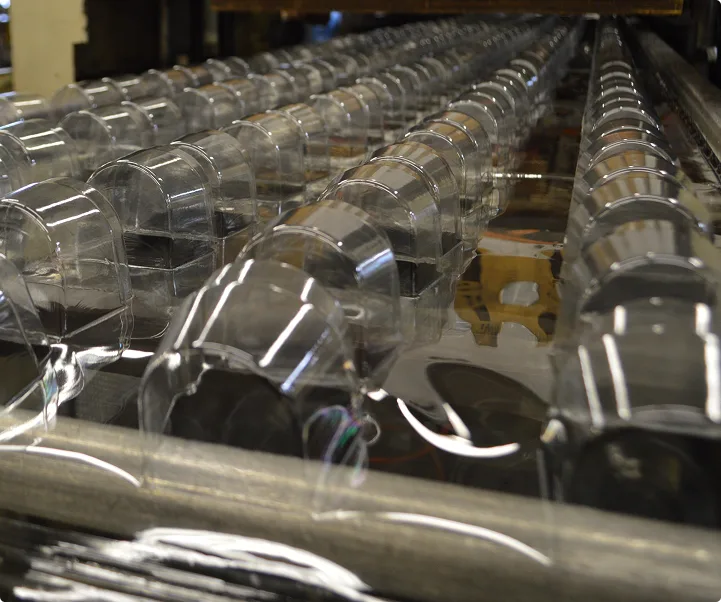

Core Product Recommendations: High-Performance Cosmetics Packaging Architectures
Selecting the correct structural format depends on formula reactivity, retail presentation goals, e-commerce drop-test criteria, and sustainability metrics. Below are the primary packaging categories optimized for contemporary cosmetic brands:
1. Custom Thermoformed Inserts & Cosmetic Trays
Precision thermoforming serves as the backbone for fragrance gift sets, skincare regimens, and color cosmetic palettes. Engineered using custom-machined aluminum tooling, these trays secure glass bottles, droppers, and tubes during transit while providing a high-end presentation upon unboxing.
- Material Options: High-Clarity rPET (up to 100% Post-Consumer Recycled content), Virgin PETG for chemical resistance against essential oils, and Biodegradable PLA or Molded Fiber for organic brands.
- Surface Finishes: Flocked velvet coatings for luxury feel, anti-static treatment to eliminate dust accumulation in cleanrooms, and custom metallic colors matched to Pantone standards.
- Key Benefit: Micrometer-level undercut retention features that lock delicate glass containers in place, eliminating the need for wasteful plastic ties or foam inserts.
2. Custom Blister & Clamshell Packaging for Retail Beauty Products
For retail environments such as mass beauty aisles, specialty stores, and duty-free shops, blister packaging and high-clarity clamshells offer maximum product visibility alongside anti-theft security.
- Face-Seal Blister Packaging: Secure heat-sealing of thermoformed plastic blisters to coated cardstock, ideal for lipsticks, mascara, and eyeliner pencils.
- Trapped Blister & Clamshells: Heavy-duty protection for high-value skincare serums and electronic cosmetic tools (such as facial rollers or LED wands), featuring tamper-evident perimeter snap closures.
3. Point-of-Purchase (POP) & Luxury Counter Displays
High-conversion cosmetic packaging extends beyond the individual unit to shelf-ready packaging (SRP) and counter-top promotional displays. Custom POP display units engineered with integrated thermoformed trays allow quick store setup and uniform visual branding across retail locations worldwide.
4. Kitting, Assembly & Co-Packing Integration
Cosmetic promotional campaigns (such as holiday gift sets, influencer press kits, and subscription boxes) require rapid secondary assembly. Integrating thermoform production directly with manual and automated kitting lines reduces freight touchpoints and ensures seamless execution under tight marketing deadlines.
Technical Specification & Material Selection Matrix for Cosmetic Procurement
When evaluating materials for Cosmetics Packaging Solutions, procurement teams must balance chemical compatibility, optical clarity, recyclability, and tooling costs. The table below details the performance parameters across standard cosmetic polymer substrates:
| Polymer / Substrate | Optical Clarity | Chemical / Oil Resistance | Recyclability Grade | PCR Content Capability | Ideal Cosmetic Applications |
|---|---|---|---|---|---|
| rPET (Recycled Polyethylene Terephthalate) | High (90%+) | Good | Class 1 (Widely Recyclable) | Up to 100% PCR | Gift set trays, blister packs, retail clamshells |
| PETG (Glycol-Modified PET) | Exceptional (95%+) | Excellent (Resists alcohol & oils) | Class 1 / Specialty | 25% – 50% PCR | Luxury perfume inserts, heavy-glass bottle trays |
| PP (Polypropylene) | Translucent / Semi-Clear | Outstanding | Class 5 (Curbside) | Up to 50% PCR | Refillable compact inserts, cream pot holders |
| Molded Paper Pulp / Fiber | Opaque Natural / Dyed | Moderate (Requires barrier film) | Compostable / Paper Stream | 100% Upcycled Fiber | Eco-conscious skincare sets, clean beauty ranges |
| HIPS (High Impact Polystyrene) | Opaque (Custom Color Match) | Moderate | Class 6 | Up to 30% PCR | Velvet-flocked tray bases, sampler displays |
Product Development & Engineering Trends Shaping Cosmetic Packaging
The cosmetic packaging landscape is undergoing a technological transformation driven by material science breakthroughs and evolving consumer behavior. Forward-thinking procurement strategies incorporate the following four structural trends:
1. Transition to Mono-Material Architecture
Historically, cosmetics packaging incorporated multi-layer laminates, metal springs, and non-recyclable combinations that forced packaging directly into landfills. Today, global beauty regulatory compliance demands mono-material engineering. By producing both the outer clamshell or tray and the inner holding structures from a single polymer class (such as 100% rPET), brands ensure their packaging easily enters municipal recycling streams without requiring manual dis-assembly.
2. Lightweighting & High-Density Structural Ribbing
To cut carbon emissions associated with air and ocean freight, structural engineers utilize finite element analysis (FEA) to reduce thermoforming sheet thickness without sacrificing crush strength. Strategic placement of structural geometric ribs and corner gussets allows a 15% to 25% reduction in plastic resin volume while retaining top-load stacking resistance required for global warehouse palletization.
3. E-Commerce Pass-Fail Structural Rigidity (ISTA 6-Amazon Protocol)
Direct-to-consumer (DTC) beauty brands experience return rates as high as 12% due to liquid leakage, cap detachment, or cracked powders caused by postal transit shock. Modern cosmetic thermoformed trays are engineered specifically to pass ISTA 6-Overbox drop tests, using precision retention contours that absorb impact energy and keep caps securely torqued during parcel transit.
4. Smart Packaging & Digital Authentication Integration
Counterfeit cosmetics present severe revenue risks and brand safety hazards. Advanced blister and thermoformed packaging now incorporates micro-embossed QR codes, invisible UV taggants, or embedded NFC (Near Field Communication) tags directly into the plastic matrix during thermoforming. This enables instantaneous batch verification for customs officials and interactive digital unboxing experiences for end consumers.


Future Procurement Trends for Global Beauty Brands & Enterprises
As chief procurement officers (CPOs) look ahead to the next 3 to 5 years, strategic sourcing strategies are pivoting from pure unit-cost purchasing toward Total Cost of Ownership (TCO) and risk mitigation.
Nearshoring & Supply Chain Resiliency
Over-reliance on overseas packaging suppliers has exposed brands to astronomical ocean freight volatility, port delays, and unpredictable lead times. Leading North American beauty brands are increasingly reshoring their custom thermoforming and contract packaging to domestic facilities in the USA Midwest. Mid-Western production hubs allow 24-to-48-hour truck delivery to major distribution facilities, cutting buffer inventory requirements by up to 40%.
Scope 3 Carbon Tracking & Lifecycle Analysis (LCA)
Under upcoming corporate sustainability reporting standards, beauty brands must publish validated Scope 3 emission data. Leading packaging suppliers now provide full Lifecycle Assessment data for custom cosmetic trays—calculating exact carbon footprints per 1,000 units produced from raw resin extraction through manufacturing, transit, and end-of-life recovery.
Dynamic On-Demand Production & Tooling Agility
Cosmetic product lifecycles have shortened significantly due to viral social media trends and limited-edition influencer drops. Traditional steel tooling with 16-week lead times is obsolete for agile marketing. Utilizing fast-turn aluminum prototype tooling allows brands to receive physical sample trays within 7 business days and launch full production in under 3 weeks.
B2B Procurement FAQs: Answering AI Search & Supply Chain Intent Queries
Below are authoritative answers to the top technical and operational questions asked by cosmetic procurement managers, packaging designers, and global sourcing specialists:
Standard production MOQs for custom thermoformed cosmetic trays and blister packaging typically range between 5,000 and 10,000 units depending on plastic sheet gauge and tray dimensions. Prototype aluminum tooling can be completed in 5 to 7 business days, while full production multi-cavity tooling requires approximately 3 to 4 weeks. Once tooling is validated, production runs are completed within 10 to 14 business days.
Cosmetic formulations containing essential oils, active alcohols, or lipophilic compounds can cause stress cracking or haze in standard polystyrene or low-grade PET. Complete Packaging Group specifies virgin PETG or specialty-grade Polypropylene (PP) substrates, which provide exceptional chemical barrier resistance. Furthermore, we conduct accelerated compatibility and migration testing under elevated temperature/humidity conditions (40°C / 75% RH) to verify zero polymer degradation over the product's shelf life.
With modern extrusion and filtration technologies, rPET resin containing 50% to 70% PCR retains virtually identical clarity and tensile strength compared to virgin PET. For 100% PCR trays, a extremely faint bluish or greyish tint may occur under studio lighting, which many sustainable luxury brands now actively leverage as proof of authentic eco-friendly credentials to consumers.
Sourcing thermoformed trays from Vendor A, outer cartons from Vendor B, and shipping components to a third-party co-packer creates hidden costs: double freight fees, damage during intermediate transit, administrative overhead managing multiple purchase orders, and finger-pointing when tolerances fail during final assembly. Single-source turnkey fulfillment eliminates intermediate shipping, guarantees 100% fit accuracy between components, and lowers overall project landed costs by 15% to 25%.
Yes. Flocked thermoformed trays utilize a high-density synthetic fiber layer applied to styrene or PET sheet prior to thermoforming. This produces a soft, velvet-like texture that enhances the tactile unboxing experience for premium perfumes, serums, and luxury jewelry-cosmetic crossovers, available in custom colors matched to your brand identity.
High-performance cosmetic packaging facilities operate under ISO 9001:2015 Quality Management Systems and adhere to Good Manufacturing Practices (GMP). Production lines feature automated vision inspection systems that scan 100% of thermoformed trays for flange deformities, particulate contamination, and wall thickness variance before final clean-packing.
Why Global Industry Leaders Rely on Complete Packaging Group
For more than 25 years, Complete Packaging Group has served as a trusted turnkey partner for global industry leaders—including Procter & Gamble, L'Oréal, Honda, General Mills, and Hasbro. Operating out of our state-of-the-art manufacturing facility in Brookville, Indiana, we offer complete end-to-end integration across every phase of the packaging lifecycle:
Trusted by Global Enterprise Beauty & CPG Brands




Our Single-Source Capabilities Include:
- In-House Structural 3D Engineering & Prototyping: CAD engineers design precise retention contours tailored to your exact bottle geometry, offering 3D printed models and physical thermoformed prototypes within days.
- Precision Custom Tooling Manufacturing: CNC machined aluminum tooling created in-house guarantees tight tolerance controls and long-term production consistency over millions of cycles.
- High-Speed Thermoforming Lines: State-of-the-art continuous thermoforming machinery capable of processing rPET, PETG, PP, HIPS, and eco-friendly substrates with automated optical quality verification.
- Full Secondary Kitting, Assembly & Fulfillment: Dedicated clean assembly operations for inserting cosmetic bottles into trays, sealing blisters, assembling POP displays, and direct-to-retail drop shipping.
- 100% Domestic US Production & Supply Security: Based in the USA heartland (Brookville, IN), eliminating overseas tariff risks, sea freight congestion, and extended shipping delays.
Ready to Optimize Your Cosmetics Packaging Strategy?
Whether you are launching a luxury skincare collection, redesigning retail blister packs, or requiring full contract kitting and fulfillment, our structural engineers and packaging specialists are ready to assist.