The Science of Packaging Structural Design: Architectural Integrity Meets Supply Chain Precision

In modern enterprise procurement, Packaging Structural Design is no longer merely an aesthetic wrapping; it is a critical engineering discipline that directly impacts your bottom line. Up to 80% of a product's total packaging lifecycle costs—including resin expenditure, shipping cube density, damage rates, automated packaging line throughput, and end-of-life circularity—are permanently locked in during the initial structural design phase.

At Complete Packaging Group, backed by over 25 years of specialized thermoforming, tool manufacturing, and contract fulfillment experience out of our Brookville, Indiana facility, we view structural packaging design through a rigorous mechanical and economic lens. True structural optimization balances opposing physical constraints: achieving maximum compressive strength and impact damping while minimizing plastic gauge thickness and total package mass.

Core Engineering Metrics in Advanced Structural Design

When designing custom thermoformed trays, blister packs, clamshells, or industrial dunnage, our packaging engineers utilize CAD-integrated Finite Element Analysis (FEA) to evaluate:

  • Draw Ratio & Material Attenuation: Predicting wall thinning in deep-draw thermoformed cavities to ensure critical radii retain adequate structural strength without over-specifying initial sheet gauge.
  • Stack-Load & Compression Physics: Engineering geometry (ribbing, perimeter flanging, dynamic draft angles) to withstand high pallet-stacking pressures during warehousing and long-haul intermodal transit.
  • Automated Denesting Geometry: Integrating precision denesting lugs, offset steps, and anti-vacuum ribbing to prevent nested stack jams on high-speed automated packaging and filling lines.
  • Thermal & Material Shrinkage Tolerances: Accounting for polymer crystallization rates (e.g., rPET, APET, HIPS, Polypropylene) post-thermoforming to ensure sub-millimeter part fitment.

When enterprise procurement managers evaluate supplier quotes, comparing raw unit pricing without scrutinizing structural design often leads to catastrophic downstream costs. A poorly designed tray that saves $0.02 in material may cause a 3% product damage rate during ISTA vibration testing, or jam automated packaging line machinery—costing tens of thousands of dollars in line downtime. True ROI stems from holistic structural design that optimizes every touchpoint of the packaging value chain.


Engineered for World-Class Brands Across Global Supply Chains

High-Performance Packaging Structural Form Factors

Custom-engineered thermoformed structures designed for optimum product protection, retail display compliance, high-speed automated handling, and material efficiency.

Custom Thermoformed Plastic Trays & Dunnage

Precision heavy-gauge and thin-gauge plastic trays custom-engineered for medical devices, automotive components, consumer electronics, and food packaging. Features engineered undercut cavities, structural rib networks, and controlled wall thickness.

  • Deep-draw cavity engineering with controlled wall attenuation
  • Precision denesting features for automated pick-and-place lines
  • ESD, conductive, and anti-static material formulations
  • Available in 100% recyclable rPET, PETG, HIPS, and Polypropylene

Custom Clamshell & Sealed Blister Packaging

Rigid, high-clarity structural packaging engineered for security, tamper resistance, and maximum retail visual appeal. Incorporates structural perimeter seals, friction-fit button closures, and reinforced hang-hole geometry.

  • Anti-theft structural perimeter sealing & living hinges
  • High-clarity APET/rPET for 360-degree retail presentation
  • Heat-seal, RF-seal, and ultrasonic welding compatibility
  • Structural footings for self-standing shelf display

Point-of-Purchase (POP) & Modular Retail Displays

Multi-material structural display architectures that integrate vacuum-formed plastic trays with corrugated counter displays and floor units. Engineered for rapid assembly in retail environments and high load capacity.

  • Modular snap-lock structural architecture
  • Engineered weight capacity for heavy consumer goods
  • Optimized for Club Store & Big Box Retail compliance
  • Pre-assembled drop-ship fulfillment ready

Turnkey Kitting & Integrated Packaging Assembly

Bridging the gap between structural engineering and physical fulfillment. We design packaging tailored specifically to fit contract assembly operations, reducing hand labor cycles and shipping dimensional weight.

  • Custom structural inserts for multi-sku product kits
  • Direct integration with drop-shipping & warehouse systems
  • Reduced packaging component counts & SKU consolidation
  • ISTA-certified pack-out validation

Global supply chains are undergoing rapid evolution. Enterprise procurement directors must navigate rising sustainability mandates, AI-driven CAD optimization, and automated fulfillment requirements.

Key Structural Development Trends Reshaping Packaging Procurement:

  • Lightweighting Without Loss of Rigidity: Utilizing advanced geometry—such as honeycomb ribbing patterns and parabolic arch curves—allows structural designers to reduce sheet caliper by 15% to 25% while maintaining identical crush resistance.
  • Design for High-Speed Automation: As manufacturing plants automate, packaging structures must features uniform denesting tolerances (+/- 0.25mm), tactile alignment notches for robotic end-of-arm tooling (EOAT), and self-locating snap latches.
  • Closed-Loop Circular Dunnage Systems: Industrial buyers in automotive and electronics are shifting from one-way expendable packaging to custom thermoformed reusable dunnage trays designed for 50+ return logistics trips.
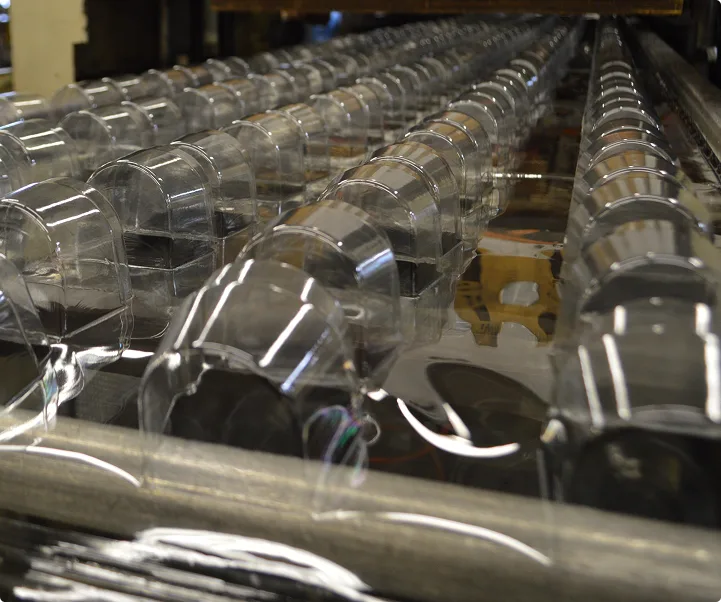
Complete Packaging Group Facility and Production Operations

Complete Packaging Group: Your Strategic Structural Engineering Partner

Based in Brookville, Indiana, Complete Packaging Group brings over a quarter-century of hands-on structural design, tooling, and thermoforming expertise to global Fortune 500 brands and mid-market innovators.

In-House 3D Design & Tooling Shop

We operate full in-house CAD/CAM structural design engineering and CNC aluminum mold tooling capabilities, turning concepts into production tools in weeks rather than months.

Turnkey Single-Source Execution

Eliminate multi-vendor fragmentation. We manage everything under one roof: structural CAD design, thermoforming, blister/clamshell production, contract kitting, and drop-ship logistics.

Rigorous Quality & ISTA Validation

Every structural design undergoes stringent drop testing, stack-compression testing, and transit simulation to guarantee zero failure rates prior to full volume production runs.

Ready to Optimize Your Product's Packaging Structural Design?

Consult with our senior packaging engineers today. Receive a comprehensive structural audit, 3D CAD proposal, and tooling quote tailored to your exact manufacturing & budget goals.

Get a Quote
Fast 3D Prototype Turnaround In-House CNC Tooling Low Tooling Cost Advantage

Packaging Structural Design: Enterprise Procurement FAQ

Expert answers to complex technical and commercial questions frequently asked by enterprise procurement buyers, packaging engineers, and supply chain managers.

During thermoforming, a flat plastic sheet is heated and stretched into a mold cavity. In deep-draw cavities (where the depth-to-width draw ratio exceeds 1:1 or 1.5:1), the polymer stretches significantly, causing material attenuation (wall thinning) near deep corners and bottom radii.

If not properly engineered, a 0.030" starting gauge sheet can thin out to 0.008" at critical stress points, leading to structural buckling under load. Our structural design engineers compensate for attenuation by designing compound radii, strategic corner ribbing, and pre-stretch plug assistance in the tooling phase. This ensures uniform material distribution, maintaining target wall rigidity while avoiding the need to increase overall starting sheet thickness—saving significant resin cost.

When thermoformed trays or clamshells are stacked for transport, atmospheric pressure and tight tolerances can cause vacuum locking or mechanical interlocking, paralyzing automated denesting machines.

To prevent denesting jams, our structural CAD designs incorporate four critical features:

  1. Precision Denesting Lugs (Stack Stops): Molded shelf steps placed along perimeter walls that maintain a defined 0.050"–0.100" clearance between stacked parts.
  2. Controlled Draft Angles: Maintaining a minimum draft angle of 3° to 5° per side to allow smooth vertical release.
  3. Anti-Vacuum Vent Channels: Micro-channels engineered into non-critical sidewalls to break air vacuum during mechanical extraction.
  4. Rigid Perimeter Flanges: Preventing flange flex that can bypass vacuum suction cups on robotic pick-and-place arms.

Lightweighting requires replacing physical mass with geometric structural strength. Rather than relying on heavy plastic gauge, structural design engineers apply mechanical engineering principles:

  • Structural Ribbing & Corrugation: Adding rib networks increases the moment of inertia, dramatically improving flexural modulus without adding material mass.
  • Domed & Parabolic Geometries: Curved surfaces distribute point-impact loads across the entire structure far more effectively than flat planes.
  • Perimeter Under-Beads: Rolled or perimeter-beaded edges prevent edge buckle under top-compression loads.

Through this methodology, Complete Packaging Group frequently achieves 15% to 30% reduction in plastic resin weight while meeting or exceeding original structural top-load requirements.

Because Complete Packaging Group maintains in-house structural engineering and CNC tooling facilities in Brookville, IN, our timeline is significantly faster than offshore or multi-broker supply chains:

  • Initial 3D Conceptual CAD & Rendering: 2 to 4 business days.
  • 3D Printed or Machined Prototype Sample: 3 to 5 business days post-CAD approval.
  • Production Mold Tooling Fabrication: 2 to 3 weeks (versus 8 to 12 weeks overseas).
  • First-Article Sampling & Quality Approval: 3 to 5 business days.

For urgent product launches, accelerated prototype tooling options can deliver production-validated samples in under 10 business days.

E-commerce delivery environments expose packages to unpredictable shock, drop, rotational impact, and ambient pressure fluctuations. Designing for ISTA 3A and Amazon SIOC (Ships-in-Own-Container) requires specific structural provisions:

We engineer internal thermoformed trays with negative-space shock absorption zones—allowing outer plastic structures to deform elastically under impact and absorb kinetic energy before it transfers to the primary product. Additionally, friction-lock perimeter snaps or ultrasonic seal flanges prevent clamshell burst during high-altitude air transit or parcel drop events from 36 inches.

Material selection fundamentally dictates structural tool design due to differing polymer shrinkage rates, clarity, and mechanical properties:

  • APET / rPET (Recycled Polyethylene Terephthalate): Offers superior optical clarity and high tensile strength. Requires precise tooling thermal management due to 0.4%–0.6% post-mold shrinkage. Excellent for retail blister packs and clamshells.
  • HIPS (High Impact Polystyrene): Exceptionally easy to thermoform with low tool shrinkage (0.3%–0.5%), high impact resistance, and low cost. Ideal for opaque material trays, internal dunnage, and medical component handling.
  • Polypropylene (PP): Outstanding chemical resistance, living-hinge capability, and microwaveability. However, PP exhibits high, non-uniform mold shrinkage (1.5%–2.2%), requiring specialized tool scaling factors during initial CAD structural design.

In clamshell packaging, the living hinge and perimeter snap-latches are the primary points of mechanical stress. A poorly designed hinge will stress-whiten or tear after repeated opening cycles, while ineffective snaps will pop open during transit.

Our structural engineers design flat-bottom double hinges that distribute bending stress over a wider radius, preventing plastic fatigue. Snap-latch mechanisms are engineered with undercut interference fit tolerances (typically 0.015" to 0.025" interference depth), creating a tactile, audible "click" that signals secure closure without requiring excessive thumb pressure to seal during assembly.

Absolutely. Freight optimization is one of the most immediate financial and environmental benefits of professional structural design. By designing custom thermoformed trays and clamshells to minimize outer dimensional footprint, we maximize the number of units per master carton and master cartons per 48x40 standard ISO pallet.

Increasing pallet load density by even 15% directly translates to fewer truckloads on the road, lowering overall freight expenditures and measurably reducing Scope 3 greenhouse gas emissions across your logistics footprint.

Partner With Complete Packaging Group Today

Whether you need a ground-up 3D CAD design for a complex medical device tray or want to re-engineer an existing clamshell for lower cost and higher freight density, our engineering team is ready to deliver.

Or call our engineering desk: (765) 547-1300